
Care Guides
Propagating Succulents From Leaves and Cuttings
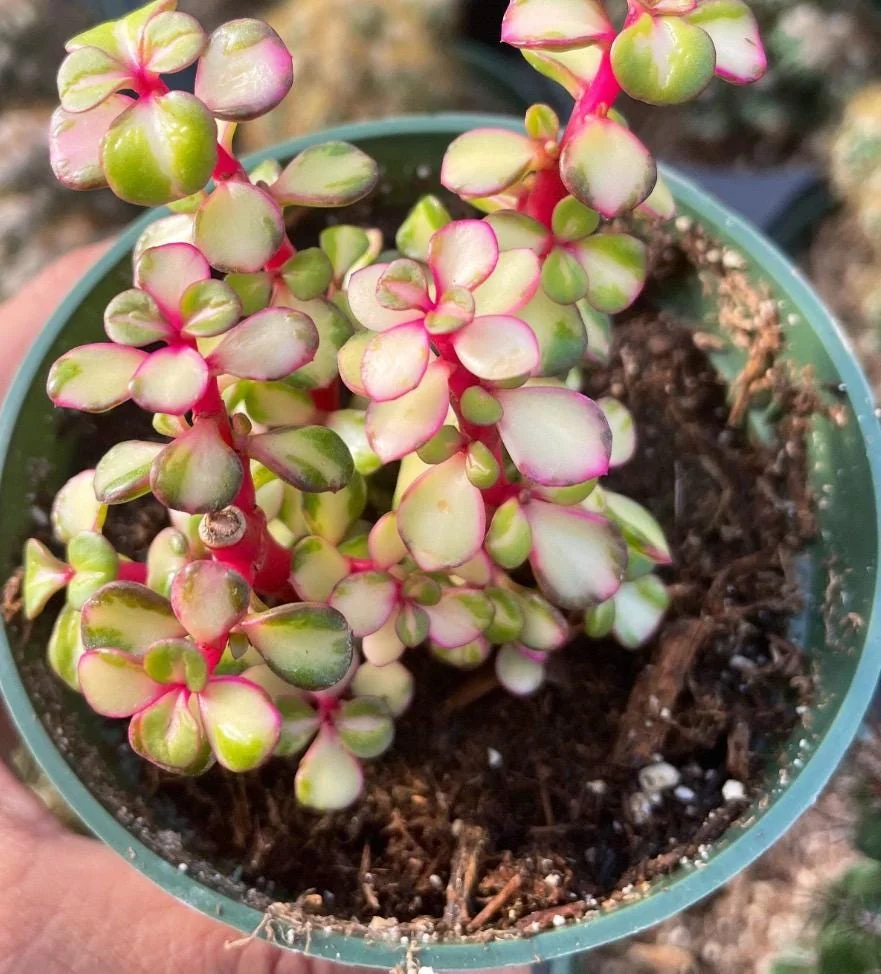
May
One of the best things about succulents is how easily many of them multiply. From a single plant you can grow dozens more for free. Late spring and early summer, when plants are actively growing, is the perfect time to try.
Method 1: Leaf propagation
Works well for echeveria, graptopetalum, sedum, pachyphytum and many jade plants.
- Gently twist a healthy leaf from the stem. It must come off cleanly with the base intact — a torn leaf will not root.
- Lay leaves on a tray or plate in a bright spot out of direct sun for 2–5 days until the end calluses over.
- Place them on top of dry succulent mix. Do not bury them.
- Mist the soil lightly every few days once tiny roots or a rosette appear.
- When the mother leaf shrivels completely, the new plant is ready to pot.
Patience is required: it can take several weeks to see roots and months to grow a decent plant.
Method 2: Stem cuttings
Best for stretched or leggy plants, as well as aeonium, crassula, kalanchoe and trailing sedums.
- Cut a healthy stem with clean scissors, leaving a few inches of stem below the rosette.
- Remove lower leaves so there is bare stem to plant.
- Let the cut end callus for 3–7 days.
- Insert into dry succulent mix and wait about a week before the first light watering.
The original stem often sprouts new rosettes where it was cut — a bonus.
Method 3: Offsets (pups)
Aloe, haworthia, sempervivum, agave and many cacti produce small offsets around their base. Once a pup is about a third the size of the parent and has some roots of its own, separate it with a clean knife, let it dry for a day or two and pot it up.
Tips for success
- Use only healthy, well-hydrated plants.
- Bright, indirect light is best for new propagations; strong sun burns them.
- Do not overwater. Rot is the most common cause of failure.
- Label everything — baby succulents all look alike.
Start your collection with plants from our succulent shop.
